
Structural Engineer Residential Hiring in Vancouver: A Quick Guide
January 29, 2026

If you’re dreaming of an open-concept living space or thinking about adding a new suite to your home, a structural engineer residential is the most important person on your team. They’re not there to slow things down; they’re there to make sure your vision becomes a safe, compliant, and valuable reality. Think of them as a safeguard for your biggest investment and your family’s well-being.
Why Your Vancouver Renovation Needs a Structural Engineer
I like to think of a structural engineer as a specialized doctor for your home’s skeleton. Before you do any major “surgery” like a renovation, they diagnose the health of your home’s framework—the beams, columns, and foundation holding everything up. Their whole job is to ensure that any changes you make, like taking out a wall or adding another floor, won’t compromise the building’s integrity.
This is especially true here in Metro Vancouver, where we deal with everything from older character homes to serious seismic considerations. That expertise is non-negotiable. Whether you’re planning a kitchen overhaul in Burnaby, a second-story addition in Richmond, or a laneway house in North Vancouver, a structural engineer provides the critical calculations and drawings you’ll need to get a building permit.
Partnering for Safety and Value
Bringing a structural engineer for residential projects on board early is one of the smartest moves a homeowner can make. It helps you avoid those nasty, expensive surprises during construction, prevents frustrating delays with city permits, and guarantees the final result is not just beautiful but fundamentally sound. This proactive step is crucial, especially when you’re considering major changes. For more on this, check out our guide on the importance of getting a contractor to assess a property’s potential before purchase.
A structural engineer translates your design dreams into a safe, buildable plan. They analyze load paths, specify materials, and create the blueprints that guarantee your renovated home can withstand everything from daily life to the seismic forces common in British Columbia.
When Is an Engineer Absolutely Essential?
Some projects just plain require an engineer’s stamp of approval. Trying to skip this step is a recipe for failed inspections, costly rework, or, in the worst-case scenario, a dangerous structural failure down the road.
To help you figure out if your project needs one, we’ve put together a quick guide.
When to Call a Residential Structural Engineer for Your Project
This table breaks down the most common renovation scenarios where a structural engineer’s assessment and stamped drawings are typically required by the city.
| Project Type | Why an Engineer Is Needed | Common in Vancouver Area? |
|---|---|---|
| Wall Removal or Alteration | To confirm if a wall is load-bearing and design a new beam and support system to carry the load safely. | Very Common. Key for open-concept layouts in older Vancouver & New Westminster homes. |
| Adding a Storey or Extension | To design a new foundation and frame that can handle the added weight and integrate it with the existing structure. | Common. Frequent in growing areas like Coquitlam, Port Moody, and Richmond. |
| Creating New Openings | To calculate how to redistribute loads around a new, large window or patio door without weakening the wall. | Very Common. A popular upgrade for bringing more light into homes across the Lower Mainland. |
| Suite Conversions | To assess floor joists for kitchen loads, plan new egress windows, and ensure fire separations meet code. | Extremely Common. A huge driver of renovations in Vancouver for mortgage helpers. |
| Deck or Balcony Construction | To ensure the structure is properly supported and safely attached to the house, preventing collapses. | Common. A must-do for safety, especially with our rainy climate affecting wood over time. |
| Seismic Upgrades | To design retrofits like foundation bolting and shear walls that help an older home withstand an earthquake. | Increasingly Common. A priority for owners of pre-1970s homes across the region. |
In short, if your project involves changing the “bones” of your house, it’s almost certain you’ll need an engineer. Getting them involved from the start ensures your project is built right, built to code, and built to last.
So, What Does a Structural Engineer Actually Do?
Let’s get right to it: what does a structural engineer for a residential project actually do? It’s far more than just crunching numbers and stamping blueprints. Think of them as a blend of a forensic investigator, a physicist, and a hands-on problem-solver, all rolled into one. They’re the experts who make sure your architect’s beautiful vision can be built safely and will stand strong against everything the West Coast can throw at it.
Their work almost always starts at your front door, not behind a desk. A residential structural engineer will come to your home, whether it’s in North Vancouver or Coquitlam, for an initial site visit. They’ll walk the property, getting a real feel for the existing structure. This means examining the foundation for subtle cracks, checking the condition of beams in the basement or attic, and even tapping on walls to understand how your home is currently handling its own weight.
This first step is all about gathering clues. Every house tells a story—how it has settled over the years, where old renovations might have tweaked the original structure, and what its inherent strengths and weaknesses are. This boots-on-the-ground assessment is critical before any math even enters the picture.
From On-Site Clues to Complex Calculations
Once they’ve completed their on-site investigation, the real heavy lifting—the brain work—begins. The engineer takes all that information back to the office and starts calculating the different forces, or loads, that your home needs to resist. These aren’t just abstract figures on a spreadsheet; they represent the very real pressures your home deals with every single day.
The calculations have to account for a few key things:
- Dead Loads: This is simply the fixed weight of the building itself—all the lumber, drywall, roofing, and permanent fixtures. It’s the baseline.
- Live Loads: This is where it gets dynamic. Live loads include temporary forces like the weight of your furniture, your family walking around, and, crucially, a heavy blanket of snow piling up on the roof during a Metro Vancouver winter.
- Lateral Loads: For us, this is a big one. Lateral loads are the sideways forces from high winds and, most importantly, the seismic forces we have to be ready for here in British Columbia.
To make sure your home can handle all this, engineers map out load paths. Picture it like this: the weight from your roof travels down through the rafters to the beams, then down through the walls and columns, and finally, it’s transferred safely into the foundation and the earth below. The engineer’s primary job is to ensure this path remains strong and continuous, especially when you decide to take out a wall or add a second storey.
Turning Math into Buildable Plans
All of this complex math gets translated into a set of structural drawings. It’s important to know these are not the same as architectural plans, which focus on layouts and aesthetics. Structural drawings are the technical, step-by-step instructions for your contractor, spelling out exactly what needs to be built to support the design.
A structural engineer’s drawings are essentially the official prescription for a healthy home renovation. They specify the exact size of a new beam, the type of bolts and connections needed, and the materials required to guarantee the structure is safe—and they provide the stamped documents you need for a building permit.
For example, if you’re knocking down a wall in a classic Port Moody special, the drawings will detail the precise dimensions and material for a new laminated veneer lumber (LVL) beam. They’ll also specify the size of the posts holding it up and exactly how they need to be anchored to the foundation. This level of detail eliminates any guesswork for your build team. If you’re interested in the broader ecosystem supporting this work, you can learn more about Timbercloud and similar platforms that connect suppliers and projects.
This simple diagram breaks down the engineer’s role into the three main phases of your project journey.
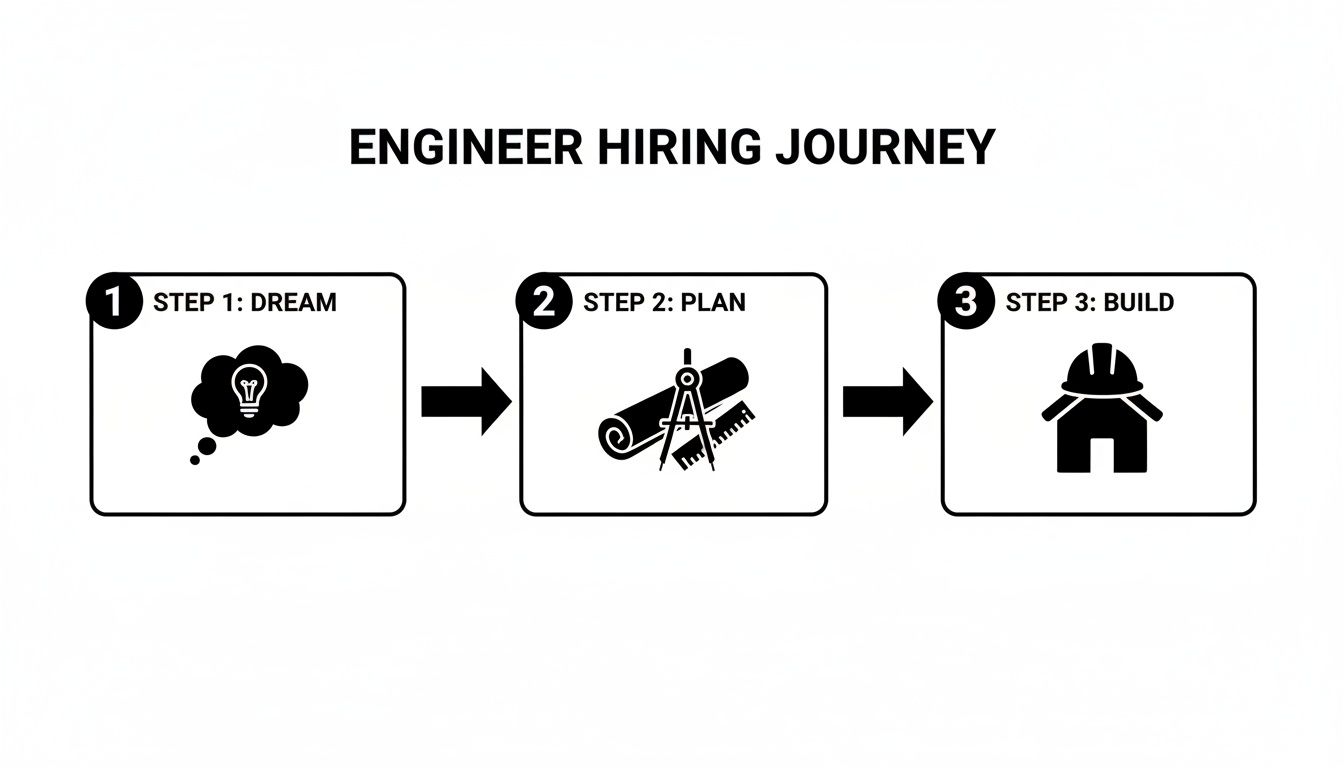
Ultimately, an engineer is the crucial link between your renovation dream and a safe, well-built reality. They provide the invisible framework that makes a beautiful design not just possible, but permanent.
Common Projects That Require an Engineer in Metro Vancouver
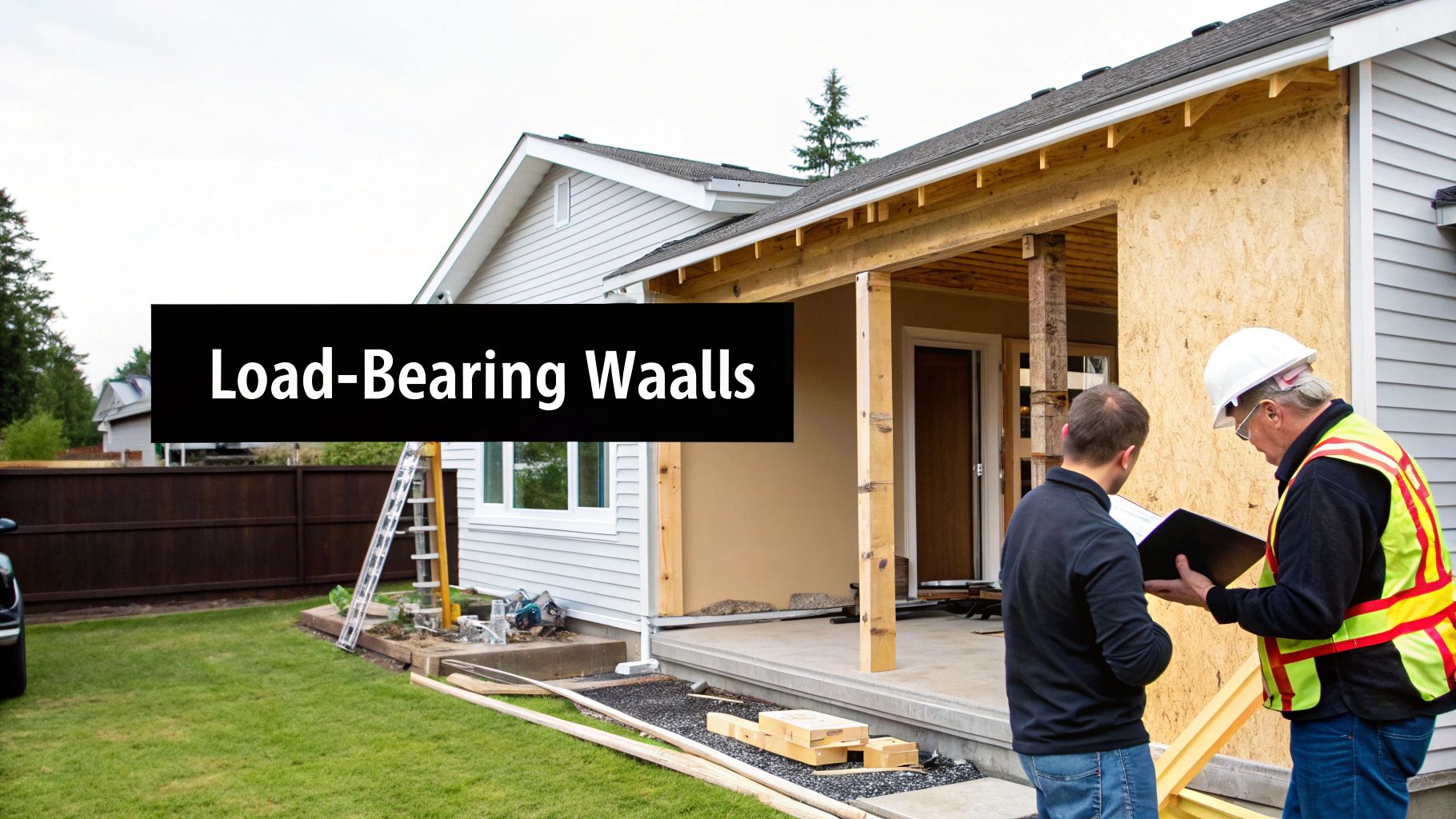
It’s a common question we hear from homeowners: when does my renovation idea stop being a simple cosmetic update and start needing professional structural oversight? Here in Metro Vancouver, with our unique mix of housing styles and seismic realities, that line is actually clearer than you might think.
Certain high-stakes projects aren’t just a good idea for an engineer—they’re required. If you want to secure a building permit and ensure your home is safe, you’ll need a structural engineer residential specialist on your team. These are projects that fundamentally change how your home carries and distributes weight, making an engineer’s input absolutely non-negotiable.
Let’s walk through four of the most common scenarios we see every day, from North Vancouver to Port Coquitlam.
Removing Load-Bearing Walls for Open-Concept Living
This is, without a doubt, the number one reason homeowners call us. That dream of a bright, airy main floor often involves knocking down a central wall between the kitchen, living room, and dining area. The catch? That wall might be holding up your second floor or even the roof.
An engineer’s job is to figure out where all that weight is going and design a new system to carry it. This usually involves a beefy beam hidden in the ceiling. They’ll do the math to calculate the precise size, material, and support system for the new beam and posts, ensuring your beautiful open space is completely sound.
Real-World Example: We worked on a classic 1960s Burnaby bungalow where the owner wanted to merge a cramped kitchen with the living area. Our engineer identified the central wall as the main support for the roof trusses. The solution was a specified steel I-beam and engineered posts, anchored to a newly reinforced concrete footing in the crawlspace. This safely transferred the entire roof load, making the client’s open-concept vision a reality.
Constructing Home Additions and Extensions
Whether you’re adding a second storey to your house in Richmond or building a new primary suite off the back of your Coquitlam home, you’re making a major change to the building’s skeleton. An engineer is essential to make sure the new addition is integrated safely and seamlessly with the existing structure.
Their work covers a few critical steps:
- Foundation Design: They’ll assess if the existing foundation can handle the extra weight or design a new one that connects properly to the old.
- Framing Plans: They create detailed plans showing the size and spacing of joists, studs, and rafters needed for the new structure.
- Connection Details: This is crucial. The engineer specifies exactly how the new part of the house must be tied into the old part, so they function as a single, unified building that settles together.
Without this expertise, an addition could overload the original frame or foundation, leading to catastrophic damage. Sometimes, the work even involves complex repairs like fixing concrete cancer, which absolutely demands specialized structural knowledge.
Legal Suite Conversions in Basements or Attics
Turning an underused New Westminster basement or a dusty Port Moody attic into a legal rental suite is a fantastic way to generate income. But to get the city’s blessing, these projects must meet the BC Building Code’s strict requirements for a secondary dwelling, and that’s where an engineer comes in.
An engineer will assess key structural elements. They confirm the floor joists can handle the “live load” of a full kitchen, with its heavy appliances and stone countertops. They also design safe ways to get in and out, which often means cutting new window or door openings that require proper structural headers. Getting these details right is critical for both safety and securing your permits.
Preserving and Updating Heritage Homes
West Vancouver and historic Vancouver neighbourhoods are filled with beautiful heritage homes. Renovating them is a delicate dance between creating a modern living space and preserving historical character. A structural engineer residential specialist with experience in older homes isn’t just a good idea—it’s essential.
These homes were built with different materials and under entirely different codes. An engineer’s assessment will pinpoint structural weak spots that need upgrading to meet modern safety standards, especially for earthquakes. This could mean anything from reinforcing old “balloon frame” walls to designing discreet steel supports that strengthen the original wood structure without erasing its history.
In all of these scenarios, the engineer is the vital link between your vision and a safe, code-compliant, and lasting result. Think of their involvement as an investment—one that protects both your home’s value and your family’s safety.
How Engineers and Contractors Work Together for a Seamless Project
Think of a successful renovation like a well-rehearsed symphony. Each musician is a master of their instrument, but it’s the conductor who brings their individual talents together to create a beautiful, cohesive piece. In the world of construction, your general contractor is the conductor, and the structural engineer is a key player—like the first-chair violinist.
This collaboration is really the secret sauce for a project that runs smoothly, sticks to the budget, and avoids the kind of costly surprises that can derail a renovation. When the engineer and contractor are working in lockstep from the very beginning, the whole process just becomes more efficient. The engineer provides the essential “sheet music”—the structural plans—and the contractor makes sure the entire construction team can play it perfectly on site.
What this partnership avoids is that classic disconnect where an engineer’s brilliant-but-complex plan turns out to be wildly impractical or unnecessarily expensive to actually build. A contractor-led approach makes sure buildability is baked into the design from day one.
The Power of an Integrated Team
The old-school way of doing things often involved a homeowner hiring an engineer, getting a set of plans, and then shopping those plans around to contractors. This approach is a recipe for communication gaps and finger-pointing. A modern, experienced general contractor, on the other hand, will bring their own trusted and vetted engineer into the project early, creating a powerful, integrated team from the get-go.
This teamwork means that every single decision gets filtered through three critical lenses:
- The Engineer’s Lens: Is it structurally sound? Is it compliant with the BC Building Code?
- The Contractor’s Lens: Is it actually buildable? Is it practical? Does it align with the budget and timeline?
- The Designer’s Lens: Does it achieve the aesthetic and functional goals the homeowner wants?
When these three perspectives are in sync, you pretty much eliminate the risk of needing to redesign plans halfway through the project—a nightmare scenario that causes major delays and budget overruns. This is especially vital in places like West Vancouver or the District of North Vancouver, where tricky building sites and specific municipal bylaws demand a unified strategy.
Think of it this way: The engineer designs the car’s engine for maximum safety and power. The contractor is the one who has to actually build the car, making sure that engine fits the chassis perfectly and can be assembled efficiently on the production line. Without that collaboration, you might end up with a fantastic engine that simply doesn’t fit the car.
From Consultation to Coordination
A seamless project follows a clear, collaborative path. It usually starts with the contractor digging deep to understand your vision and budget. From there, they bring in the right residential structural engineer to figure out if what you want to do is feasible. This could be anything from a suite conversion in New Westminster to a major home addition in Port Coquitlam.
The engineer then does their site visit and runs their calculations, but with direct input from the people who will actually be building it. This practical feedback loop is invaluable. For instance, the contractor might suggest using a specific type of beam that’s more readily available in the Vancouver market, which could save both time and money without compromising the engineer’s design one bit.
Once the structural drawings are finalized, the contractor takes over, coordinating them with the architectural plans and the work of all the other trades. They become the single point of contact, ensuring the electricians, plumbers, and framers all understand exactly how their work fits around the new structural elements. This level of oversight is a core benefit of working with an experienced general contractor in Vancouver.
Ultimately, this synchronized approach completely changes the renovation process. It shifts from a series of disconnected steps into a fluid, responsive workflow where every professional is aligned toward a single goal: delivering a beautiful, safe, and exceptionally built home.
Budgeting for Structural Engineering Costs in Vancouver
Figuring out the costs and timelines for a structural engineer residential is a crucial first step in any successful renovation. Here in Greater Vancouver, having a realistic budget for this service from the get-go means no nasty surprises later on. Think of it this way: the investment in professional engineering is a tiny slice of your total project cost, but it pays huge dividends in safety, city compliance, and your own peace of mind.
Most structural engineer residential in Vancouver will use a couple of different fee models, and which one they choose really depends on the size and scope of your project. Let’s break down what that means for anything from a simple wall removal to a major home addition.
Typical Fee Structures
For a quick consultation or a small, well-defined job, an hourly rate is pretty standard. This might cover a preliminary site visit to figure out if that wall you want to knock down is load-bearing, or to get an expert opinion on a crack you’re worried about.
For most renovation projects, though, you’ll likely see a flat fee or a lump-sum contract. This is great because it gives you cost certainty for a clear set of deliverables. These packages often look something like this:
- Beam Design Package: This typically includes the site assessment, all the necessary calculations, and a stamped drawing for removing a load-bearing wall—a super common request in homes across Burnaby and Richmond.
- Addition or Extension Package: This is a bit more involved. It will cover the foundation design, framing plans, and all the connection details for projects you might see in areas like Coquitlam or Port Moody.
- Full Permit Drawing Set: For bigger, more complex jobs, this is the whole shebang. It includes every structural plan you’ll need to submit to the city.
The fee structure simply matches the project’s complexity. A straightforward beam calculation will have a clear, fixed cost. On the other hand, a multi-faceted heritage restoration in West Vancouver might need ongoing consultation billed at an hourly rate.
Estimated Costs and Timelines in Metro Vancouver
Of course, every project has its own unique quirks, but here are some typical cost ranges to help you start budgeting for a structural engineer residential in the Lower Mainland:
- Initial Site Consultation: $300 – $600
- Load-Bearing Wall Removal Drawings: $1,500 – $3,500
- Deck or Balcony Design: $1,500 – $4,000
- Small Addition or Suite Conversion: $3,000 – $8,000+
- Major Renovation or Second Storey Addition: $7,000 – $20,000+
It’s always interesting to see how our local rates compare to other places with high seismic risks. Take California, for example, where building codes are just as stringent. The average hourly rate for a professional engineer in San Francisco can climb to $164, with project costs in Los Angeles often averaging $1,249. You can explore more about these comparative engineering costs in California to get a sense of where our market stands.
Timelines are just as critical as the cost. A simple assessment and drawing might only take one to two weeks to turn around. More complex designs for a full home renovation in Vancouver could easily take three to six weeks before the plans are even ready to be submitted for a permit in municipalities like Port Coquitlam or New Westminster. It’s absolutely essential to factor this design phase into your overall project schedule to keep things moving smoothly.
How to Choose the Right Structural Engineer for Your Home

Picking the right structural engineer for your residential project is one of the most critical decisions you’ll face. It’s a choice that directly affects not just the budget and timeline, but the fundamental safety of your home. The best person for the job has a mix of sharp technical skills, deep local knowledge, and the ability to explain complex ideas clearly.
So, where do you start? A great first step is tapping into your general contractor’s network. A seasoned contractor has already built relationships with engineers they trust—professionals who know the ins and outs of building codes and soil conditions in municipalities from West Vancouver to Port Coquitlam. This pre-existing rapport can save a ton of time and ensures the engineer’s plans are practical and buildable from day one.
Key Questions to Ask Every Potential Engineer
Before you sign on the dotted line, you need to do your homework. A short interview can reveal a lot. Having a few key questions ready helps you compare your options and find someone who truly understands your vision.
Here are the essentials to cover:
- Local Experience: “How many residential projects have you completed right here in [Your Municipality]?” Someone familiar with Burnaby’s permit process, for example, can help you sidestep major delays.
- Residential Focus: “What percentage of your projects are residential?” An engineer who specializes in homes will have a much better handle on the unique challenges of renovating existing structures compared to one who mostly works on new commercial buildings.
- Insurance and Licensing: “Can you provide proof of your P.Eng. designation in British Columbia and your professional liability insurance?” This is non-negotiable. It’s there to protect you.
- Communication Process: “Who will be my go-to contact, and how quickly can I expect a reply to my questions?” A project runs smoothest when communication is clear, consistent, and prompt.
Choosing a structural engineer residential is an investment in certainty. Their expertise ensures your project is not just visually stunning but fundamentally safe, compliant, and built to last for generations. This is the foundation of a successful renovation.
Investing in this kind of expertise is one of the smartest ways to protect your home. In a seismically active area like the Lower Mainland, their review is indispensable. In fact, data from California shows that professional structural reviews can prevent 25% of potential failures in older homes. You can discover more about the importance of residential structural engineers and see how their work is crucial for maintaining a home’s integrity.
Ultimately, the time you spend finding the right structural engineer residential specialist pays for itself. A great engineer who works seamlessly with your contractor makes everything simpler, from the first sketch to the final walk-through of your beautifully finished home.
A Few Common Questions About Structural Engineers
Jumping into a home renovation project brings up a ton of questions, especially around the technical stuff. We get it. To help you get a clearer picture, here are some straightforward answers to the questions we hear most often from homeowners around Vancouver.
Do I Need an Engineer for a Simple Kitchen or Bathroom Makeover?
Probably not. If you’re just swapping out cosmetic items like cabinets, countertops, or light fixtures, you can usually skip the engineer. These are surface-level changes that don’t touch the home’s core structure.
But the game changes the second you plan to move or take out a wall, cut a new opening for a window or door, or add something with serious weight, like a massive stone island. Any time you alter the building’s frame in Vancouver or any neighbouring municipality, you’ll need a stamped engineering drawing to get your building permit.
What’s the Difference Between an Architect and a Structural Engineer?
It’s a great question, and the roles are often confused. Think of it like this: an architect is the visionary who designs the look, feel, and flow of your home. The structural engineer residential is the scientist who makes sure that vision can be built safely and will stand strong against everything from gravity to earthquakes.
Architects craft the layout and style, while engineers focus on the “bones” of the building—the foundation, beams, columns, and supports that hold it all up and ensure it meets the BC Building Code. They’re two different specialists on the same team, both absolutely essential.
An architect designs the dream; a structural engineer residential makes sure it won’t fall down. You need both to perfectly blend beautiful design with safe, solid construction.
Should I Hire the Engineer Before the Contractor?
You can, and sometimes it makes sense to bring an engineer in early for a quick feasibility check. It’s a way to get a quick expert opinion on whether your big idea is even possible.
However, the most streamlined path is usually through your general contractor. A good contractor already has a team of engineers they trust and have worked with on dozens of homes in your area, whether it’s in Richmond, Burnaby, or North Vancouver. This keeps everyone on the same page from day one, ensuring the engineering plans are practical, buildable, and in line with your budget. It’s the best way to avoid miscommunication and expensive changes later on.
What’s the Ballpark Cost for Engineering Drawings in Places Like Burnaby or Richmond?
The cost really depends on how complex the job is. For a relatively simple task, like the calculations and drawing for removing one load-bearing wall, you might be looking at something in the $1,500 to $3,500 range.
For a much larger project—say, adding a whole second floor or doing a major overhaul on a heritage home in West Vancouver—the engineering fees could land anywhere from $5,000 to over $15,000. It’s a small slice of the overall renovation pie, but it’s a non-negotiable investment in your home’s safety, legal compliance, and long-term value.
Your home isn’t just a building; it’s your biggest investment. Making sure any changes are structurally sound is the only way to protect its value and the safety of your family. At Domicile Construction Inc., we handle all the coordination with top-tier engineers, making sure your vision comes to life seamlessly and safely.
Ready to talk about your project? Contact us today to get started.