
Walk in shower for seniors: Your Vancouver guide to safe, accessible bathrooms
December 22, 2025

A walk in shower for seniors is one of the smartest and most effective changes you can make to a home, especially here in Vancouver and the surrounding communities where so many of us want to stay in our homes for the long haul. It gets rid of that high, dangerous ledge on a standard bathtub, swapping it for a low-threshold or completely curbless entry. This one change can dramatically cut the risk of slips and falls, turning what's often the most hazardous room in the house into a safe, comfortable space.
Why a Walk In Shower Is Key to Aging in Place in Vancouver
For seniors living everywhere from West Vancouver to Port Moody, the goal is often the same: stay in the home and community you love. But for many, the bathroom—especially an older one with a traditional high-sided tub—can be the single biggest barrier to making that happen.
This isn't just something we see locally; it's a nationwide trend. A recent AARP poll, for instance, revealed that a massive 79% of older adults would need to remodel their bathroom with features like a walk-in shower to age safely where they are. By getting rid of that tub ledge, which can be a real obstacle at 16-18 inches high, a senior-friendly walk-in shower tackles one of the leading causes of serious falls head-on. You can dig deeper into how seniors are adapting their homes over at agingsafelybaths.com.
Enhancing Daily Safety and Comfort
At the end of the day, it's all about preventing falls. The combination of wet, slick surfaces and the awkward movement needed to get over a tub wall is a recipe for disaster. A walk-in shower just makes everything simpler and more stable. This is a game-changer in places like Burnaby, Richmond, New Westminster, and Coquitlam, where countless older homes were built with those standard bathtub-shower combos.
But it’s about more than just safety. Think about the daily comfort and dignity it brings. A properly designed walk-in shower delivers:
- Effortless Access: No more straining to lift your legs over a high barrier. It’s a huge relief for anyone with sore joints.
- Peace of Mind: It gives family members confidence that their loved ones can bathe safely and independently.
- Future-Proofing: This isn't just a short-term fix. It’s a lasting investment that supports independence for years, easily adapting to any future mobility changes.
A walk-in shower is more than a renovation; it’s a functional tool that empowers seniors to maintain their daily routines with confidence and self-reliance.
Getting a professional home safety assessment for seniors is a great next step. It can highlight other simple but crucial modifications that, along with a new shower, will make the entire home safer and more liveable.
The Anatomy of a Safe and Accessible Shower
When we're planning a walk-in shower for a senior, some features aren't just "nice to have"—they're absolutely essential. Getting these details right from the start is the difference between a shower that just looks good and one that is genuinely safe and supportive for years to come.
Let's move past the general ideas and dig into the specific components that truly make a difference in day-to-day safety and independence.
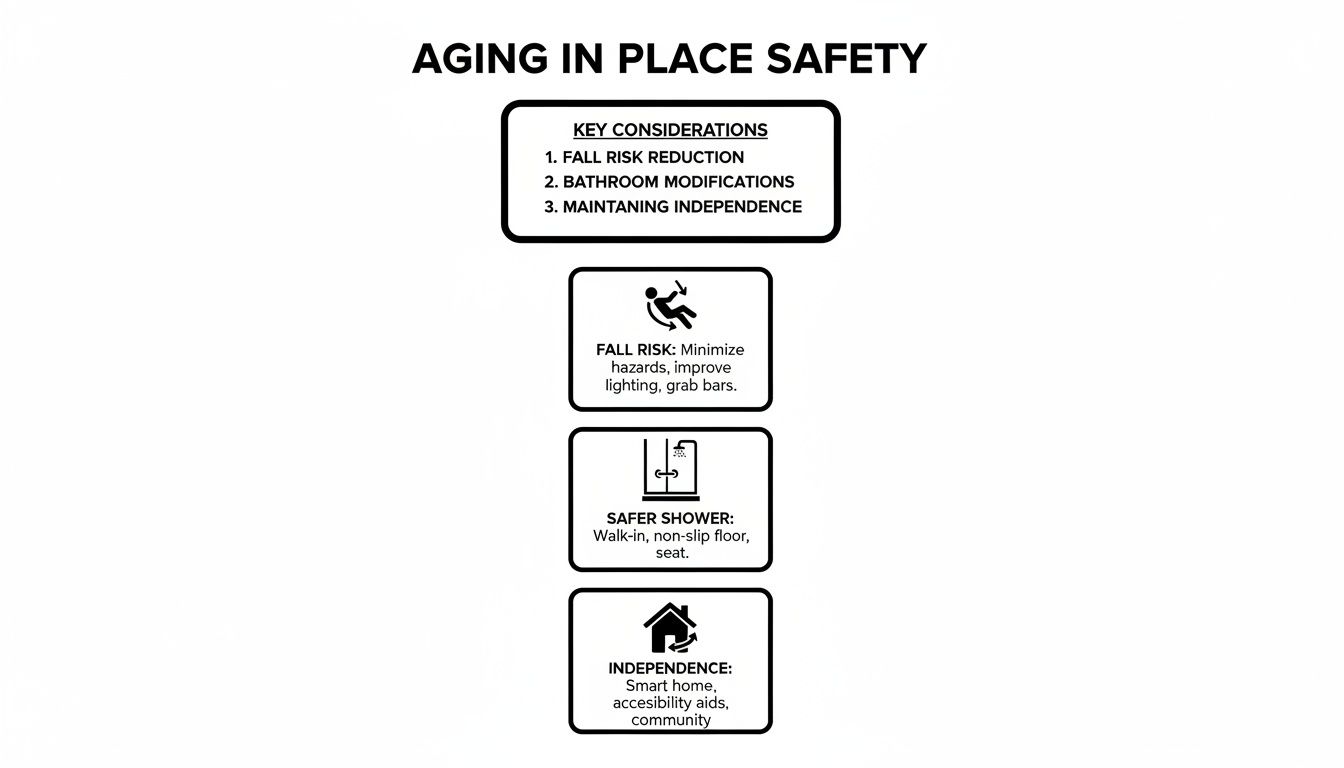
As you can see, focusing on the bathroom isn't just about fixtures; it's about proactively addressing fall risks to support long-term independence at home.
The Entry: Curbless vs. Low-Threshold
Your first big decision is how to get into the shower. A curbless or zero-threshold entry is the gold standard for accessibility. It creates a completely seamless transition from the bathroom floor into the shower space, which is ideal for wheelchair users or anyone with significant mobility challenges.
A low-threshold entry is another fantastic, and often more budget-friendly, option. These curbs are typically only a couple of inches high. They do a great job of containing water while being infinitely easier and safer to step over than the wall of a standard bathtub. For many homeowners I work with in areas like Vancouver, Burnaby, or Richmond, this provides the perfect balance of safety and cost-effectiveness.
Grab Bars: Placement is Everything
Don't think of grab bars as an afterthought; they are a core safety system. Where you put them is just as important as having them. Proper placement provides support exactly where it's needed most during the riskiest moments.
You'll want to plan for:
- A vertical bar at the shower entrance to offer a stable handhold while stepping in and out.
- A long, horizontal bar on the main wall for stability while standing or moving around.
- Another bar near the controls to help with adjusting the water, preventing any awkward or unsafe leaning.
Key Takeaway: Grab bars must be professionally anchored directly into the wall studs. A bar that isn't secured properly offers a false sense of security and can be more dangerous than no bar at all. It needs to support a person's full body weight, period.
To help you keep track, here's a quick-reference guide comparing the most crucial features for your new shower.
Must-Have Features for a Senior-Friendly Walk-In Shower
| Feature | Primary Purpose | Key Benefit for Seniors |
|---|---|---|
| Curbless Entry | Eliminates any barrier at the shower entrance. | Allows for seamless wheelchair/walker access; completely removes trip hazards. |
| Grab Bars | Provide stable handholds for support and balance. | Prevents slips and falls during entry, exit, and movement within the shower. |
| Built-in Seating | Offers a secure place to sit while bathing. | Reduces fatigue and dizziness; enables safer bathing for those with low stamina. |
| Handheld Showerhead | Allows for directed water flow from a seated position. | Increases independence and control; eliminates the need to stand or strain to rinse. |
| Slip-Resistant Flooring | Increases traction on wet surfaces. | Dramatically reduces the risk of slipping, which is the most common bathroom accident. |
Each of these elements works together to create a cohesive system that prioritizes safety without compromising on style or comfort.
Seating and Handheld Showers: A Perfect Pair
A built-in bench or a sturdy, professionally installed fold-down seat is a game-changer. It provides a stable place to rest, which is vital for anyone who experiences fatigue, dizziness, or has balance issues. This simple feature removes the need to stand for the whole shower, which immediately reduces the risk of a slip.
Now, pair that seat with a handheld showerhead on an adjustable slide bar. This is the final piece of the puzzle. This combination allows someone to shower comfortably while seated, directing the water exactly where it's needed without any straining or awkward reaching. For the seniors I've helped in North Vancouver, Port Coquitlam, and West Vancouver, this pairing is what truly delivers an accessible, comfortable, and dignified bathing experience.
Choosing Materials That Blend Safety with Style
One of the biggest worries I hear from homeowners across Vancouver, North Vancouver, and West Vancouver is that an accessible shower will look cold and institutional. But that’s a thing of the past. Today’s materials mean your walk in shower for seniors can be both a safe haven and the stunning centrepiece of your bathroom.
The secret is to start from the ground up.
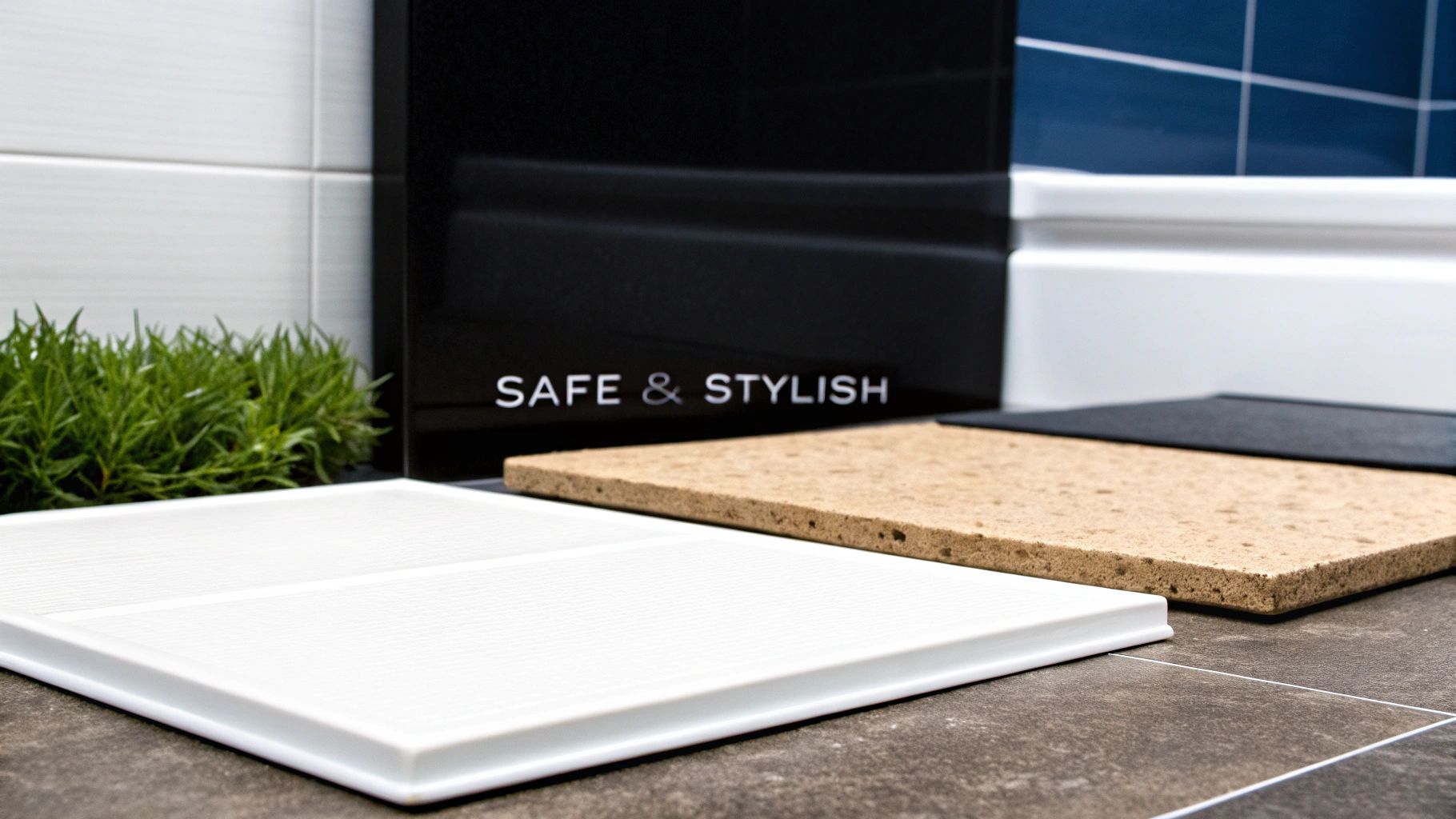
Your shower floor is the most critical surface for preventing slips. What you're looking for is a material with a high coefficient of friction (COF). It’s just a technical term for how much grip a surface has, and a higher number is exactly what you want when water is involved.
Flooring and Shower Pan Options
Textured porcelain or ceramic tiles are fantastic choices. I often recommend them because their matte, slightly roughened surfaces give you excellent traction underfoot, but they still look incredibly sophisticated. With a nearly endless variety of styles available, you’ll have no trouble finding one that fits your bathroom’s look.
Another go-to option, especially popular for renovations in Burnaby, New Westminster, and Richmond, is a solid-surface or acrylic shower pan. These are pre-formed, one-piece bases that often come with a built-in, slip-resistant texture. Their biggest advantage? No grout lines to scrub, which makes cleaning a breeze and adds a huge layer of safety.
Stylish and Low-Maintenance Wall Surrounds
When it comes to the walls, you generally have two main paths, and the right choice really boils down to your preference for looks versus long-term upkeep.
- Acrylic Wall Panels: These give you a clean, seamless, and modern feel. Since there are no grout lines, they are incredibly easy to wipe down and are naturally resistant to mould and mildew.
- Classic Tile: Nothing beats tile for design flexibility. From timeless subway patterns to sleek, large-format porcelain, the possibilities are endless. Just remember that the grout will need to be sealed and cleaned from time to time to keep it looking its best.
In my experience with aging-in-place projects, the low-maintenance appeal of acrylic panels is often the deciding factor. It simply removes the physical strain of keeping a shower spotless and hygienic.
Finishing Touches That Enhance Safety
Beyond the big surfaces, a few small details can make a world of difference. Proper lighting is absolutely essential. I always advise installing waterproof, recessed LED lights right in the shower ceiling to get rid of any dark corners or shadows that could cause a misstep.
Smart storage is another game-changer. A built-in wall niche is perfect for keeping shampoo, soap, and other essentials off the floor but still within easy arm's reach, whether you're standing or sitting. It eliminates the need for any risky bending or reaching.
You can see how all these elements come together by looking at a gallery of thoughtfully designed bathroom renovation projects to get ideas for your own beautiful and functional space.
Budgeting for Your Shower Project in Metro Vancouver
Figuring out the costs is a huge part of planning a walk in shower for seniors. Around Metro Vancouver, the price tag for a professional job can really vary, but setting a realistic budget from the get-go is the secret to a smooth project without any nasty surprises.
The final bill comes down to a few key things about your specific home and the choices you make. For instance, a basic tub-to-shower swap in a Port Coquitlam condo will naturally be a smaller investment than a full-blown curbless installation in a West Vancouver heritage house where we have to reroute plumbing.
What Drives the Cost of a Walk In Shower
A few big-ticket items will shape your total investment. Thinking these through before you even talk to a contractor will help you get a much more accurate estimate.
- Project Complexity: Are we just pulling out a tub and putting a shower in the exact same spot? Or are we talking about moving drains, water lines, or even taking out a wall? Any time we have to change the bathroom's existing bones—the plumbing and structure—the labour costs are going to climb.
- Material Selection: This is where you have a lot of control. Gorgeous, high-end porcelain tiles, custom-fabricated glass doors, and designer fixtures will definitely push the price up. But there are fantastic, durable alternatives like quality acrylic shower pans and wall surrounds that look great and perform beautifully without breaking the bank.
- Accessibility Features: The specific safety features you choose also matter. A beautifully custom-built tiled bench, for example, is going to be more of an investment than a top-quality, professionally installed fold-down seat.
A well-planned walk-in shower is not just an expense; it is a powerful investment in long-term independence and safety at home. It’s a one-time cost that provides lasting daily value.
Viewing the Project as a Long Term Investment
It really helps to think about the cost of a walk-in shower in the context of other potential expenses down the road. The reality is, making this kind of change is often a cornerstone of aging in place, especially when you compare it to the staggering, recurring costs of assisted living.
In fact, studies have shown that two-thirds (67%) of seniors feel that home adaptations like a safe shower are what allowed them to maintain their independence longer. For a deeper dive into the numbers, The Senior List offers detailed insights on assistance programs.
Financial Support for Vancouver Area Seniors
The good news is that homeowners in British Columbia might not have to foot the entire bill themselves. There are some excellent programs designed specifically to help seniors make their homes safer and more accessible.
One of the best resources out there is the BC Rebate for Accessible Home Adaptations (BC RAHA). This is a grant program funded by BC Housing for eligible low- and moderate-income seniors and people with disabilities to help pay for these exact kinds of home modifications. A walk-in shower is a classic qualifying project, which could cover a good chunk of your renovation costs.
Considering a full bathroom renovation in Vancouver with a contractor who knows the ropes can help you sort through these options. We can help you navigate the paperwork and design a space that's not just safe and functional, but also beautiful.
Finding a Trusted Contractor in Your Community
Choosing the right professional for this job is arguably the most critical decision you'll make. A great contractor does more than just install a shower; they ensure it's safe, built to last, and compliant with all the local building codes specific to Metro Vancouver, from Richmond to Port Moody and everywhere in between.
The stakes are genuinely high. Studies show that 25% of seniors experience at least one fall each year, and a staggering 80% of those falls happen in the bathroom. This is why professional installation isn't just a recommendation—it's essential. It’s what guarantees that grab bars can truly support 250+ pounds of force and that a zero-threshold entry is perfectly waterproofed to prevent hidden rot and structural damage down the line. You can dig into more of these stats over at ConsumerAffairs.com.
Vetting Your Local Options
Finding the right team in a busy area like Burnaby or the District of North Vancouver means you'll need to do a little homework. I always suggest starting with a shortlist of contractors who focus on bathroom renovations, especially those who have a proven track record with aging-in-place projects.
Before you even pick up the phone, make sure they tick these boxes:
- Active WorkSafeBC Coverage: This is an absolute must in British Columbia. It protects you from any liability if a worker gets injured on your property. No exceptions.
- Liability Insurance: Ask to see their certificate of insurance. You’re looking for a minimum of $2 million in liability coverage, which protects your home from accidental damage during the renovation.
- Local References: A contractor with deep roots in your community, whether it's Coquitlam, the City of North Vancouver, or West Vancouver, will be proud to share references from past clients who live nearby.
Key Questions to Ask Every Contractor
Once you've narrowed it down, the interview is where you find the right fit. It’s about more than just the quote. You’re looking for someone with the right experience and communication style.
Here are a few questions I always tell homeowners to ask:
- "Can you show me a portfolio of walk-in showers you’ve completed for seniors?" You want to see real examples of the features you need, like curbless entries or built-in benches, not just generic bathroom photos.
- "Who will be my main point of contact on-site?" A dedicated project manager is a game-changer. Knowing you have one person to call makes the whole process smoother.
- "How do you handle surprises, like finding rot or old plumbing issues once the walls are open?" An experienced pro won't panic. They’ll have a clear, transparent process for discussing changes and any associated costs with you.
- "What's your typical timeline for a project like this, from demo day to the final walkthrough?" A detailed schedule shows they're organised and respect your time and home.
A trustworthy contractor will give you a detailed, itemized quote that breaks down the costs for labour, materials, and permits. Be wary of vague, lump-sum estimates—they can often hide future expenses. Always push for clarity upfront.
Understanding the Renovation Process
Knowing what to expect can make the renovation feel much less stressful. A typical project begins with protecting your home by covering floors and sealing off the work area from dust. Demolition comes next, followed by any rough-in work for plumbing or structural changes. After that, it’s all about building your new shower: waterproofing, tiling, and installing the final fixtures.
Throughout it all, a good contractor keeps you in the loop. You can see how a professional general contractor in Vancouver manages these stages to deliver a seamless experience from the first consultation to the final handshake.
Got Questions About Your Walk-In Shower Project?
It’s completely normal to have a long list of questions when you’re thinking about a bathroom renovation. Let's tackle some of the most common ones we hear from homeowners across Vancouver, Burnaby, Richmond, and the Tri-Cities who are planning a walk-in shower for seniors.
How Long Does This Actually Take?
For a straightforward tub-to-shower conversion—where we’re not rerouting pipes or knocking down walls—a professional crew can often get the job done in about three to five days. That timeline covers the whole process: demolition, prep work, and installing all the new fixtures and glass.
But it's not always that simple. The timeline can stretch out if your project involves more complex plumbing or structural changes. Another potential hold-up is permitting. If we need a permit from your city, whether it's Vancouver, the City of North Vancouver, or Coquitlam, we have to factor in that approval time. A good contractor will always give you a realistic schedule upfront, so you know exactly what to expect before the first hammer swings.
Do I Really Need a Permit for This?
This question comes up all the time, and it really hinges on the scope of your renovation. If you're just swapping an old tub for a shower base in the same spot, without touching the plumbing inside the walls, you often don't need a permit in places like Burnaby, West Vancouver, or Richmond.
However, you will almost certainly need a building permit if your project includes:
- Moving the shower drain.
- Relocating the water supply lines.
- Making any changes to the bathroom's structure.
Your contractor should be the expert here. A reputable pro will know the local bylaws inside and out—from Port Moody to New Westminster and the District of North Vancouver—and will handle the entire permitting process for you. This is crucial for ensuring your renovation is up to code and won't cause headaches down the road.
What’s the Best Non-Slip Flooring for Our Wet Climate?
With Vancouver’s notorious dampness, a shower floor with fantastic grip is an absolute must-have. You need something that provides solid traction, even when it’s covered in soap and water.
My go-to recommendation is usually a textured porcelain or ceramic tile. Look for tiles with a high "coefficient of friction" (COF) and a matte finish—glossy tiles are beautiful but become incredibly slippery when wet. Using smaller tiles can also help, as the extra grout lines create more texture and grip.
Another excellent choice is a single-piece acrylic shower base with a built-in non-slip texture. The big win here is that there are no grout lines to scrub, which makes cleaning a breeze while still giving you a reliably safe surface.
Are There Any BC Grants That Can Help with the Cost?
Yes, there are programs that can help ease the financial side of an accessibility renovation. The main one to look into is the BC Rebate for Accessible Home Adaptations (BC RAHA).
Run by BC Housing, this program offers grants to eligible low- and moderate-income seniors and people with permanent disabilities. It's designed to help pay for home modifications that make daily life safer and more accessible—and a walk-in shower is a perfect example of a qualifying project. This grant can make a real difference in your budget and help make this essential upgrade possible.
A safe, beautiful, and accessible bathroom is key to aging in place with confidence and comfort. If you're ready to start planning your project in Vancouver or any of the surrounding communities, including Burnaby, Richmond, West Vancouver, North Vancouver, New Westminster, Coquitlam, Port Coquitlam, or Port Moody, the team at Domicile Construction Inc. has the hands-on experience to guide you every step of the way. Visit us online to start the conversation.