
Your guide to pre purchase inspection vancouver for buyers
November 23, 2025

In Vancouver's cutthroat real estate market, a pre-purchase inspection is one of the smartest moves you can make. Think of it as your final line of defence against hidden problems and unexpected costs. It’s a thorough, top-to-bottom assessment of a property by a professional, designed to uncover any issues before you're legally committed. This knowledge gives you the power to negotiate, plan for future repairs, or even walk away from a deal that could turn into a financial nightmare.
Why An Inspection Is Non-Negotiable In The Vancouver Market
Buying a home anywhere in Metro Vancouver is a massive financial undertaking. Whether you're looking in Vancouver proper or in surrounding areas like Burnaby, Richmond, Coquitlam, Port Moody, or New Westminster, the stakes are incredibly high. With property values being what they are, the last thing anyone needs is a five-figure surprise a month after moving in.
That's why you shouldn't see an inspection as just another closing cost. It's a critical investment in your financial security and peace of mind. It takes the guesswork out of the biggest purchase of your life and turns it into a clear, informed decision.
A home can look fantastic on the surface—new paint, staged furniture, and great lighting can hide a multitude of sins. An inspector, however, is trained to see what you can't. They spot the subtle clues that point to bigger problems, like faint water stains hinting at a foundation leak, old knob-and-tube wiring hidden in the walls of a North Vancouver character home, or poor grading that causes drainage issues on a sloping West Vancouver lot.
Gaining Leverage And A Clear Path Forward
At its core, a pre-purchase inspection in Vancouver delivers a detailed, impartial report on the true state of the home. This document isn't just a simple checklist of problems; it’s your most powerful tool during the final stages of a transaction.
- Real Negotiation Power: If the report shows the roof has only a couple of years left or the furnace is on its last legs, you have concrete evidence to negotiate a lower price or ask the seller to make the repairs.
- A Roadmap for the Future: Even if you decide to buy the home as-is, the inspection report becomes your manual for future maintenance. You'll know what needs attention and can start budgeting for those expenses right away.
- Spotting the Deal-Breakers: Sometimes, an inspection uncovers a true money pit—major structural defects, a failed building envelope, or mould hiding in the walls. These are the red flags that give you the confidence to walk away and save yourself a world of trouble.
A Smart Trend For Buyer Protection
More and more buyers are wising up to the risks of skipping this step. In British Columbia, the shift has been dramatic. By 2012, over 70% of buyers were getting a professional home inspection, a huge jump from less than 40% in the late 1990s. This isn't just a trend; it's a clear sign that homebuyers understand how vital this piece of due diligence really is.
If you're new to the concept, it's worth reading through a comprehensive guide to what a home inspection is to get a better sense of the scope and process. You can find more details on this trend in Canadian home buying habits by reviewing the full report on pre-purchase home inspections.
The Complete Vancouver Home Inspection Checklist
A proper pre-purchase inspection in Vancouver is a lot more than just a quick walkthrough. It’s a deep, systematic dive into hundreds of components, all designed to give you a clear, unbiased picture of a property’s true condition. For anyone buying a home, from Richmond right up to the District of North Vancouver, this checklist is the inspector’s roadmap to make sure nothing gets missed.
Think of your inspector as a detective for houses. They’re trained to spot clues, follow the evidence, and build a complete case file—your inspection report—on the property's health. The whole process is structured to cover every major system, from the ground up.
The flowchart below shows how a good inspection gives you the power to uncover defects, negotiate from a position of strength, and ultimately, get some real peace of mind.
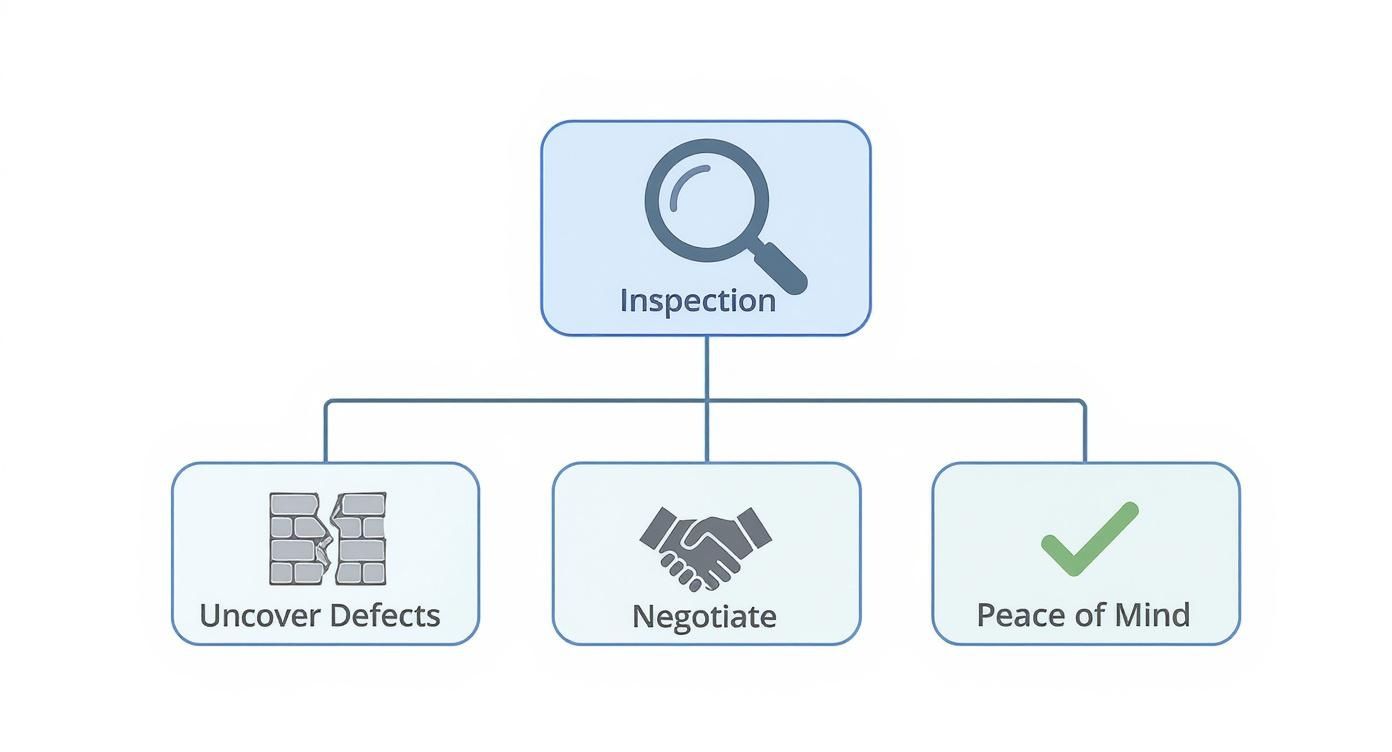
As you can see, the whole point is to arm you with knowledge. It’s about making a sound financial decision. Let’s break down exactly what a professional is looking for.
Structural Integrity and Foundation
The foundation is the literal bedrock of your investment, so this is where it all starts. An inspector will meticulously check for subtle signs of trouble that could signal massive expenses later on. This is especially crucial in the older homes you'll find in New Westminster or the character neighbourhoods around Vancouver.
- Foundation Walls and Slabs: Inspectors are hunting for significant cracks, bowing, or any signs of shifting. Sure, hairline cracks can be normal settling, but those big, horizontal, or "stair-step" cracks in concrete or masonry? Those often point to serious structural movement or heavy water pressure.
- Support Systems: This means getting into the basement or crawl space to check the floor joists, support posts, and beams. They’re looking for sagging, moisture damage, or the tell-tale signs of insect infestation.
- Seismic Readiness: While it's not a full seismic engineering assessment, an inspector will note if the house is bolted to its foundation—a critical earthquake safety feature in our region. They can quickly identify homes that likely need seismic retrofitting.
A solid structure is the skeleton of the house; everything else depends on it. Any red flags here deserve serious attention and might even require a follow-up with a structural engineer.
The Building Envelope and Drainage
Here in the rainy Lower Mainland, a home’s ability to keep water out is everything. The "building envelope"—the skin of the house that separates the inside from the outdoors—gets a huge amount of attention during any pre purchase inspection in Vancouver. Problems here are a leading cause of the most expensive repairs.
An inspector will focus on:
- Exterior Walls and Siding: They’ll check for cracks in stucco, gaps between siding boards, or faint water stains that hint at moisture getting trapped behind the finish.
- Windows and Doors: Failed seals are a big one. Frames are examined for any rot or decay, and fogging between window panes is a dead giveaway that a seal has broken, tanking its insulating ability.
- Roofing System: The inspector gets a good look at the condition of the roofing material, whether it's shingles, metal, or something else. They're scanning for heavy moss buildup, damaged or missing shingles, and general signs of aging. Flashing around chimneys, vents, and skylights gets extra scrutiny, as these are common leak points.
- Gutters and Downspouts: Proper drainage is non-negotiable. Inspectors make sure gutters are securely attached, clear of gunk, and sloped correctly to channel water far away from the foundation. Clogged or damaged gutters are enemy number one for foundations and siding.
A compromised building envelope is one of the most common—and costly—problems we see in Metro Vancouver homes. An inspector’s trained eye is your best defence against buying a property with a hidden water problem.
Mechanical and Electrical Systems
The systems that make a house tick—heating, plumbing, and electrical—are complex and can be a gut punch to the wallet if they fail. An inspector will run these systems through their paces to assess their age, condition, and safety. This is a vital step, especially in older homes in Burnaby or Port Coquitlam that might be hiding outdated, and sometimes dangerous, components.
- Heating and Cooling (HVAC): The furnace and any A/C units are tested. The inspector notes the age and service history, confirms it operates correctly, and gives the ductwork a look. An end-of-life furnace can easily be a $5,000 to $10,000 replacement.
- Plumbing: All the accessible pipes are checked for leaks, and every fixture is tested. They’ll evaluate the water pressure and inspect the hot water tank for its age, signs of leakage, and proper installation.
- Electrical: The main electrical panel gets a thorough safety check. The inspector is looking for hazards like old knob-and-tube or aluminum wiring, overloaded circuits, or improper grounding. They’ll also test a representative number of outlets and switches throughout the house.
Interior Spaces and Components
Inside the home, the inspection continues room by room. The focus here is less on cosmetics and more on spotting signs of underlying issues that might not be obvious at first glance.
An inspector will be on the lookout for:
- Signs of Moisture: Water stains on ceilings or walls, a musty smell in the air, or visible mould growth are all red flags. They point to leaks from the roof, plumbing, or a failure in the building envelope.
- Floors, Walls, and Ceilings: These are checked for hints of structural movement, like noticeably sloping floors or large, sprawling cracks in the drywall.
- Pest Infestations: A good inspection goes beyond the visible to find hidden threats. Knowing how to identify termites and other wood-destroying insects is key, as an inspector will look for tell-tale signs like frass (insect droppings) or damaged wood.
- Appliances: Major appliances included in the sale are usually tested to make sure they’re in good working order before you move in.
By methodically working through this checklist, a professional home inspector delivers the hard data you need to move forward with confidence, armed with a true understanding of the property you hope to call home.
Navigating Vancouver-Specific Property Risks
Buying a home in Metro Vancouver isn’t like buying anywhere else. A property in Coquitlam faces entirely different environmental pressures than a waterfront home in West Vancouver. This is where a skilled local inspector becomes your most valuable asset during a pre-purchase inspection in Vancouver, spotting the kind of regional risks a generic checklist would completely miss.
This isn't just about ticking boxes; it's about deep, local knowledge. From the lingering effects of past construction booms to our unique coastal geography, several key risks demand a much closer look before you even think about signing on the dotted line.
The Leaky Condo Legacy
For many locals, the term "leaky condo" still brings a sense of dread, and for good reason. Buildings put up between the mid-1980s and the early 2000s are notorious for moisture problems, largely due to design trends and building code quirks of that era.
When inspecting a strata property from this period in places like Burnaby, New Westminster, or Port Moody, a sharp inspector zeroes in on the building envelope. They’ll be hunting for subtle signs of water staining under windows, failing sealant, and then diving into the strata documents for any mention of special levies for water damage or envelope repairs—a nightmare project that can easily cost an owner tens of thousands of dollars.
A crucial part of this process is a deep dive into the strata's depreciation report. This document is a window into the building's financial health and tells you whether the strata council is proactive about maintenance or kicking a very expensive can down the road.
Floodplain and Seismic Concerns
Living on the coast means dealing with the realities of water and seismic activity. If you're looking at homes in low-lying areas like Richmond or parts of Port Coquitlam, understanding your floodplain risk is non-negotiable. An inspector can spot the tell-tale signs of past water issues, check if the furnace and hot water tank are elevated, and assess the condition of any sump pumps.
Then there's the elephant in the room: earthquakes. Our location in a seismically active zone makes a home's structural integrity a massive factor. While a standard inspection isn't a full-blown engineering report, a good inspector can flag major vulnerabilities.
- Foundation Anchoring: They'll get into the crawlspace or basement to see if the home’s wood frame is properly bolted to its concrete foundation—a critical connection for earthquake safety.
- Cripple Wall Bracing: Older homes often have a short "cripple wall" between the foundation and the first floor. The inspector will look for plywood shear bracing, which keeps the house from sliding off its foundation.
- Chimney Condition: An unreinforced masonry chimney is a huge liability in a quake. This will be immediately flagged for a more detailed assessment.
Because these risks are so neighbourhood-specific, it helps to know what to look for where.
Common Property Risks in Metro Vancouver
| Area/Municipality | Primary Risk | What to Inspect For |
|---|---|---|
| Richmond, parts of Port Coquitlam | Floodplain & Soil Liquefaction | Sump pump condition, elevation of mechanicals, foundation cracks, drainage systems. |
| Vancouver West Side, Kitsilano | Heritage Home Issues & Seismic | Knob-and-tube wiring, asbestos, foundation anchoring, unreinforced masonry. |
| North Vancouver (City/District), West Vancouver | Slope Stability & Drainage | Retaining wall condition, surface water management, signs of soil erosion. |
| Burnaby, New Westminster, Port Moody | Leaky Condo Syndrome | Building envelope condition, window seals, strata depreciation reports, special levy history. |
| East Vancouver, Coquitlam | Unauthorized Suites & Older Systems | Separate electrical panels, proper egress, interconnected smoke alarms, plumbing capacity. |
This table gives you a starting point, but a thorough inspection will dig much deeper into the specific history and condition of the property you're considering.
Character Homes and Hidden Hazards
Who doesn't love the charm of an old character home in Vancouver, the City of North Vancouver, or New Westminster? That charm, however, often comes with a whole host of hidden headaches. These properties demand an inspector who truly understands the quirks of old-school building practices and materials.
One of the biggest culprits is asbestos, a hazardous material found everywhere in homes built before 1990—from insulation and flooring to siding. An inspector won't test for it on the spot, but they know exactly what to look for and will flag any suspect materials for specialized testing. Likewise, old knob-and-tube wiring is a serious fire hazard that most insurers won't touch without a costly full rewire. Finding these things out before you buy is absolutely critical. To dig deeper, you can learn about the unique challenges of renovating a heritage home in our detailed guide.
The Unauthorized Suite Problem
In a region with our housing prices, unauthorized secondary suites are everywhere. They can be a fantastic mortgage helper, but they also carry significant legal and safety risks that can come back to bite you.
An inspector can't give you a legal opinion on a suite's status, but they can spot the major red flags from a mile away. They'll check for proper egress (are the windows big enough to escape through?), interconnected smoke alarms, and whether the electrical panel looks like it can safely handle the load from two households. Uncovering a dangerous, poorly built suite during an inspection can save you from future liability and a massive bill to make it right.
How to Find and Vet the Right Home Inspector

Choosing the right professional for your pre-purchase inspection in Vancouver is just as critical as the inspection itself. Anyone can get a certificate, but not all inspectors have the same depth of experience, especially with the unique building styles and regional risks scattered across the Lower Mainland.
The goal is to find someone with genuine, hands-on experience in the type of home you're looking at.
Think of it this way: a certified home inspector is like a family doctor for a house. They give it a thorough check-up, flagging a whole range of potential issues from the foundation right up to the roof. Their job is to give you a broad, diagnostic picture of the property's overall health.
A contractor, on the other hand, is more like a specialist—say, a cardiologist. You bring them in when a specific problem has already been identified, like a major foundation crack or a serious leak, and you need an expert opinion on the exact scope and cost of the fix. For a pre-purchase assessment, you always start with the general practitioner.
Questions to Ask a Potential Inspector
Before you hire anyone, you need to do your own mini-inspection of the inspector. A quick phone call with a few targeted questions will tell you everything you need to know about their real-world expertise. This is how you find someone who truly understands the difference between a West Vancouver character home and a new build in Port Moody.
Here are a few practical questions to get you started:
- What Are Your Certifications? In British Columbia, inspectors should be certified through a reputable organization. Make sure their credentials are up to date and easy to verify.
- Are You Fully Insured? This is non-negotiable. They must carry both Errors and Omissions (E&O) insurance and General Liability insurance. This protects you if they miss something critical or accidentally cause damage during the inspection.
- What Is Your Experience in My Target Neighbourhood? Ask them point-blank about their work in Burnaby, Richmond, or wherever you're buying. An inspector who knows the common headaches in that specific municipality is worth their weight in gold.
- Can I See a Sample Report? A sample report is a direct window into the quality of their work. You want to see something detailed, packed with clear photos, and full of plain-language explanations—not just a generic checklist.
A great inspection report is a detailed roadmap, not just a list of problems. It should empower you by clearly explaining the significance of each finding, helping you distinguish between minor maintenance and major red flags.
The Value of a Contractor's Perspective
While an inspector provides that crucial overview, there are times when bringing in a contractor for a second opinion is a very smart move.
If the initial report flags a major structural problem or a significant building envelope issue, a specialized contractor can give you a detailed repair estimate. This equips you with hard numbers for negotiating with the seller. Our guide on getting a contractor to assess a property’s potential dives deeper into this process.
By vetting your inspector properly from the start, you’re setting yourself up to make a clear-headed, confident, and well-informed decision.
Understanding Your Inspection Report and Spotting the Red Flags
Getting that 50-page report after your pre purchase inspection in Vancouver can feel overwhelming. It looks more like a technical manual than a simple home report card. But knowing how to read it is the final, most important step in making a smart purchase. The trick is learning to see past the noise and focus on what truly matters.
Most inspection reports aren't designed to give a simple pass or fail. Think of it as a comprehensive health check-up for the property. They usually start with a summary of the biggest findings—this is your cheat sheet, so start there. After that, the report dives into each system of the home, one by one, mirroring the inspector's checklist and backing everything up with photos and notes.
Maintenance vs. Mayhem: Learning to Tell the Difference
The sheer number of notes in a report can set off alarm bells, but remember: no house is perfect. Not even a brand-new one. The real skill is sorting the inspector's findings into three distinct piles.
- Routine Maintenance: These are the little things. A dripping tap, a window that sticks in the summer, or a clogged gutter. They're good to be aware of, but they're just part of normal homeownership. No need to panic here.
- Necessary Repairs: This is the stuff that needs attention sooner rather than later to avoid bigger headaches down the road. It could be a furnace that's on its last legs, some cracked shingles, or an electrical outlet that isn't up to modern code. These items are often great points for negotiation.
- Critical Red Flags: These are the potential deal-breakers. We're talking about issues tied to the home's core systems that could mean huge, unexpected costs or serious safety issues.
The goal of the report isn't to scare you away from a good home; it's to give you the clarity needed to make a smart financial decision. A finding is only a "red flag" if its cost, complexity, or safety risk is beyond what you are willing and able to take on.
Red Flags That Should Make You Hit Pause
Every home in Vancouver, Burnaby, or Port Coquitlam has its own quirks, but some issues should immediately grab your full attention. These aren't just minor fixes; they're symptoms of deep-seated problems that almost always require a specialist and a significant amount of money to resolve.
Here are a few examples of red flags that give you serious negotiating power—or might just be your cue to walk away.
- Any Sign of Water Intrusion: This is the big one in our rainy climate. Be on high alert for any mention of moisture stains on ceilings, active leaks, high moisture meter readings in walls, or visible mould in the attic or crawlspace. Water damage can point to a failing building envelope or foundation issues, both of which are notoriously expensive repairs.
- Major Structural or Foundation Problems: If the report mentions significant foundation cracks (especially horizontal ones), basement walls that are bowing inward, or floors that are obviously sagging, that’s a five-alarm fire. These issues threaten the entire structural integrity of the home.
- Outdated or Unsafe Electrical Systems: An inspector flagging active knob-and-tube wiring or an ancient, undersized electrical panel (like a 60-amp service) is highlighting a major safety hazard. This almost always means a complete, costly rewire is in your future.
- End-of-Life Roof or Building Envelope: A roof that needs replacing tomorrow is an immediate $10,000 to $30,000+ hit to your wallet. For condos, major problems with the building envelope can result in massive, multi-million dollar special levies passed on to the owners.
Finding these issues is never fun, but it’s infinitely better to know now than after you’ve closed the deal. Some problems can be managed with a solid renovation budget. If you're looking at a condo, our guide with budget-friendly tips for renovating your condo can help you plan for those costs. At the end of the day, that inspection report is your best tool for negotiating a better price, asking for repairs, or having the confidence to walk away from a potential money pit.
Understanding Inspection Costs and Timelines
When you're staring down the barrel of a down payment, closing costs, and moving expenses, the price of a pre purchase inspection in Vancouver can feel like one more thing to add to the pile. But let's reframe that. This isn't just another bill; it's arguably one of the smartest investments you'll make during the entire home-buying marathon.
Figuring out the budget is pretty straightforward. The cost is almost always linked to the property's size and complexity. After all, a sprawling, older home simply has more nooks and crannies to check than a brand-new downtown condo.
A Realistic Cost Breakdown
Whether you're looking at a condo in Richmond or a detached house in the District of North Vancouver, the pricing for a quality inspection is fairly consistent across Metro Vancouver.
- Condominiums: For a typical condo, you can expect to pay between $400 and $550. This covers your suite, plus a good look at the building's shared systems and common areas.
- Townhouses: In places like Burnaby or Port Moody, a townhouse inspection usually runs from $500 to $650. The slightly higher cost reflects the larger space and the fact that you have your own roof and exterior walls to worry about.
- Detached Houses: For a standard single-family home in Coquitlam or New Westminster, you're generally looking at the $550 to $750+ range. The final number can climb depending on the home's square footage, its age, and whether there are extra buildings like a laneway house or a detached garage.
It helps to think of the inspection fee less as a cost and more as cheap insurance. Spending a few hundred dollars now to sidestep a surprise $20,000 foundation problem down the road is a massive win.
Mapping Out The Inspection Timeline
Vancouver's real estate market doesn't wait for anyone. Subject removal periods are notoriously short—often just seven days. That means you need to be ready to move fast.
Here’s what the timeline usually looks like, and it’s quicker than you might think:
- The Inspection Itself (2-4 hours): A proper, thorough inspection takes a few hours on-site. This is your golden opportunity to tag along, ask questions, and see what the inspector sees with your own eyes. It's an incredible learning experience.
- Receiving the Report (Within 24 hours): A professional inspector won't leave you hanging. You should receive a detailed digital report—packed with photos and clear, easy-to-understand notes—the same day or the next morning.
With such a tight window, the best strategy is to do your homework ahead of time. Start researching and short-listing inspectors before you even make an offer. That way, the second your offer is accepted, you can make one call and get it booked. This gives you precious time to digest the report and negotiate if you need to, all without the last-minute panic.
Got Questions About Vancouver-Area Inspections? We've Got Answers.
Buying a home anywhere in the Lower Mainland is a huge deal, and it's natural to have questions. Here are a few of the most common ones we hear from buyers, with straight-up advice to help you navigate the process.
Do I Really Need an Inspection for a Brand-New Home in Coquitlam?
Yes, absolutely. People often think "new build" means "perfect," but that's rarely the case. While every new home comes with a builder's warranty, that warranty is only as good as the builder standing behind it. An independent inspection looks out for your interests, not theirs.
A good inspector will spot poor workmanship, things the trades forgot to finish, or even code violations that slipped through the cracks. Finding these issues before you take possession gives you powerful leverage to get the builder to fix them on their dime, saving you the headache of chasing them through the warranty program later on.
The Seller of a Place in Burnaby Won’t Let Me Get an Inspection. What Should I Do?
This is probably the biggest red flag you’ll ever see in real estate. In a hot market, some sellers might favour offers without an inspection subject, but a flat-out refusal to allow an inspection at all? That usually means they know something is seriously wrong and are hoping you won't find out.
If you buy that home, you're inheriting every single one of its problems, which could mean tens of thousands of dollars in surprise repairs. In almost every single case, the smart move here is to walk away. Don't let a seller's secrecy become your financial nightmare.
Think of it this way: an inspection is your right to look under the hood before buying the car. If a seller won't even let you pop the latch, you have to assume the engine is about to explode.
Will an Inspection in North Vancouver Tell Me if There’s Asbestos or Mould?
A standard home inspection is a visual, non-invasive process. Your inspector is trained to recognize the tell-tale signs of potential trouble—like water staining that suggests mould growth, or specific building materials common in North Vancouver homes (both the City and District) built before 1990 that are known to contain asbestos.
What they won't do is take physical samples and send them to a lab; that's a different specialty. If they see something concerning, their report will strongly recommend you bring in an environmental testing company for definitive answers. Consider that recommendation your signal to pause and get the specialists in before you commit.
If your inspection report has turned up a few surprises or you're already dreaming about a renovation, you'll need a contractor you can trust. Domicile Construction Inc. provides expert pre-purchase consulting and handles full-scale renovations across Greater Vancouver, helping you understand a property's potential and turn it into the home you've always wanted. Learn more about our services.